The Matching-Pots Myth: When Variety Helps a Plant Display
Matching pots aren’t required for a cohesive plant display. Use a shared color or shape to connect varied containers while keeping the arrangement lively.
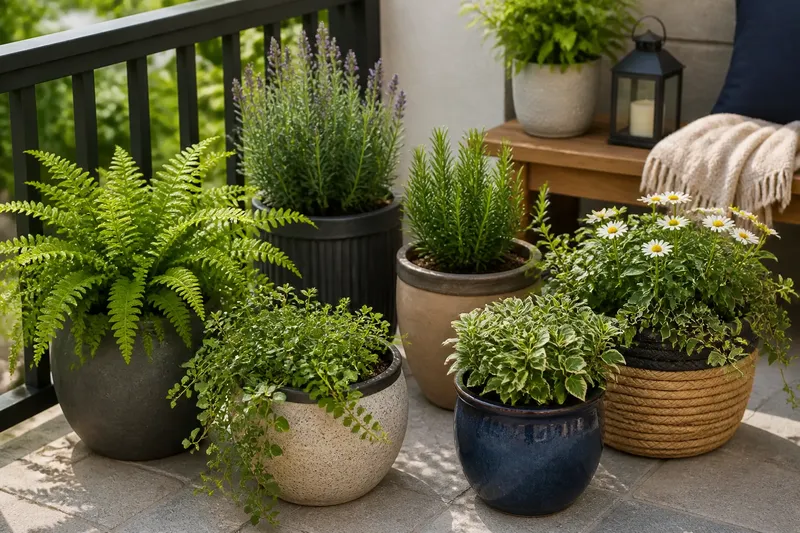
You set a fern beside a pot of trailing herbs, then notice their containers look like they came from different gardens. That can be an advantage: a plant display does not need matching pots if one repeated color or shape gives the collection a visual thread.
The trick is to choose that thread before arranging the plants. A shared detail can make ceramic, terracotta, metal, and woven-look containers feel related, while differences in texture and form keep the grouping from looking like a store display. Work through the choices in order, beginning with the place where the pots will sit.
Read the setting
Look at the patio, balcony, or garden-room corner from the spot where you usually see it. Note the existing colors and shapes: perhaps a dark railing, pale paving, a timber bench, or the squared lines of a planter shelf. These are useful cues, not rules that every pot must copy.
Choose one feature to repeat. Color is easy to spot, but shape works too: several rounded rims or a few tall, straight-sided containers can link pots made from different materials. Repeating both color and shape may make the display feel overly uniform, so let one carry the connection and allow the other details to vary.
For example, say you have a narrow balcony with charcoal railings and a small blue-glazed pot. You could make charcoal the recurring color in two other containers, then keep their silhouettes and finishes different; the pots would relate to the railing without turning into a matching set.
Choose the linking detail
Gather the containers you already own before buying anything. Put them together on the ground and decide which single feature occurs naturally among them—or would be simple to repeat with one new pot. A repeated color need not cover the whole container: a rim, glaze, band, or subdued painted surface can provide the connection.
If the containers have many strong colors already, use shape instead. A repeating rounded profile can unite varied glazes; a repeated tall form can give a loose collection a deliberate rhythm. Think of the repeated detail like a refrain in a song: it helps the pieces hang together without making every line identical.
Keep the link noticeable but not dominant. If each pot competes for attention, the plants can disappear behind the containers. Where foliage or flowers bring vivid color, quieter pots often leave more room for the plants to lead.
Sort plants by needs
Before assigning plants to pots, group them by growing conditions rather than appearance alone. Check each plant’s label for light and watering guidance, and consider whether the spot offers the conditions it needs. A sunny ledge and a shaded corner may call for separate arrangements even if you hoped to place the plants side by side.
Consider container suitability as well. A pot needs an appropriate way to drain for the plant and setting, and its size should allow the plant room to grow without making it awkward to move or water. If a decorative outer pot has no drainage opening, use an inner nursery pot that can be lifted out for watering and draining, provided that arrangement suits the plant.
Plants that share similar light and watering needs are easier to group closely. If their care differs, they can still belong to the same display, but keep them in separate pots so each can be tended appropriately.
Build the arrangement
Place the largest containers first, then set smaller ones around them. Vary height and outline so every pot does not form a level row. A low, spreading plant can soften a tall container, while upright foliage can give a lower grouping a clear focal point.
Turn each pot until the repeated color or shape is visible from the main viewing angle. Leave enough access to reach the plants for watering, remove fallen leaves, and lift a container if needed. The display should feel composed from the patio seat or doorway, not only from directly above.
Now step back and check the balance. If one pot looks disconnected, try moving it nearer to the repeated detail before deciding it does not belong. If the group feels too busy, remove or relocate a container rather than adding another matching pot by default.
Questions about varied pots?
Do all the pots need the same color?
No. One repeated color can tie together containers with different finishes, while the remaining colors can vary. If the pots already share a similar shape, color does not need to do all the work.
Can different pot materials sit together?
Yes, if their visual differences suit the setting and the shared detail is easy to notice. For example, a glazed ceramic pot and a plain terracotta one can feel connected through a repeated dark rim or similar rounded profile.
How many accent colors should a display have?
There is no fixed number that suits every setting. Start with the colors already present in the plants and surroundings, then use one of those as the repeated cue if it helps the collection feel coherent.
Should matching pots hold matching plants?
Not necessarily. Choose plants for their care needs and the available conditions, then use the containers to make the arrangement feel related. Similar plants can share a visual grouping without needing identical pots.
Make a final edit
View the arrangement from its usual approach and notice what catches your eye first. Ideally, the plants and the repeated detail work together; if a bright container draws all the attention, swap its position or set it apart slightly. A small change in spacing can also make the variety look intentional.
When adding a pot later, look for the same linking color or shape rather than a perfect match. This keeps the plant display flexible as foliage changes and new containers appear, while preserving the simple connection that made the varied grouping work.