Outdoor Dining Chairs: Arms or No Arms?
Outdoor dining chairs with arms or without can change comfort, spacing, and movement. Match the style to your table, guests, and patio routine.
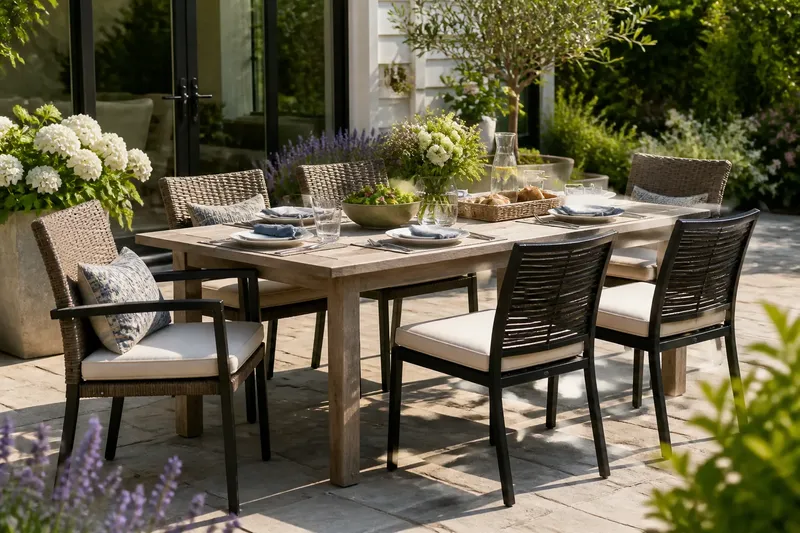
You pull a chair back from the patio table, and its arms catch the table edge before the seat clears. That small snag can turn outdoor dining into a shuffle, even when the chair itself feels comfortable. Choosing outdoor dining chairs with arms or without is less about a universal winner than about matching the chair to the table, the people using it, and the way the space works.
Armchairs offer a place to rest your elbows and can feel supportive during a long meal. Armless chairs are often easier to slide, turn, and arrange closely. Either type can be a poor fit if its shape conflicts with the table or leaves diners struggling to settle in. Troubleshooting the mismatch starts with noticing exactly where the friction occurs.
Chairs hit the table
If an armchair will not tuck under the table, first identify what is making contact. The arms may meet the apron, the table’s lower frame, or the edge of the tabletop. These are different obstructions: a chair that clears the top but strikes the apron will not be fixed by simply pushing harder.
Compare the chair’s arm height with the underside of the table, including any crossbars or decorative trim. Also consider the chair’s width at the arms. Some armchairs flare outward, so they can collide with neighboring chairs even when their seats fit comfortably beneath the table.
- Try the chair at the table before buying, if possible, and push it in as far as a diner would normally need.
- Check the full path from the seated position to a comfortably tucked position, not just whether the front edge enters.
- If the fit is close, consider a lower-profile arm or a narrower chair rather than assuming the arms will flex or settle into place.
For a table with a deep apron, armless chairs are often the simpler match. If arm support matters, look for a table with enough clearance beneath its top or select chairs with arms shaped to fit that space. The relevant dimensions and assembly details depend on the product; consult the maker’s specifications before choosing.
Diners feel cramped
A place setting can look generous before people sit down, then feel crowded once elbows, plates, and serving dishes share the table. Arms add a boundary around each seat, and wide arms can claim more of the table’s usable width than the seat alone suggests. Armless chairs may allow diners to adjust their position more easily, but closely arranged seats can still feel cramped.
Notice where the crowding happens. If shoulders brush, the chairs may be too broad or packed too closely. If elbows hit the arms, the armrests may be high or positioned awkwardly for the diners. If plates and forearms compete for space, the table setting—not only the chair style—may be part of the problem.
Try a chair arrangement with the same place settings and serving pieces you expect to use. Leave room for each diner to sit down and turn toward the table without repeatedly bumping a neighbor. If the table is used for shared platters, allow for those dishes in the layout instead of judging only by empty tabletop.
Say you have a compact rectangular table and four broad armchairs that nearly touch when pushed in. Replacing the two chairs along the long sides with narrower armless seats could give diners more room to angle their bodies, while keeping armchairs at the ends for guests who prefer support. The visible result to look for is easier settling and less contact between chair frames; the best arrangement depends on the actual chair and table shapes.
Chairs are hard to move
Some outdoor chairs resist being pulled out, turned, or repositioned. Arms can offer a convenient grip, but they can also make a chair bulky to maneuver through a tight arrangement. Armless chairs tend to have fewer projecting parts, though a heavy frame or slippery seat can still make one awkward to handle.
Try the movement that matters in your routine: pull the chair back, turn it slightly, and return it to the table. Pay attention to the feet as well as the frame. A chair that scrapes on a deck board or catches on an uneven patio joint may be difficult to move regardless of whether it has arms.
Look for a stable frame with a shape that is easy to grasp. A chair with open sides may be simpler to lift or guide than one with a broad, continuous shell. If people routinely need to carry chairs between the table and storage, consider the chair’s overall weight and how its frame can be held comfortably.
Where the surface is uneven, try the chairs in their intended location rather than relying on a showroom floor. Outdoor materials and foot designs vary, so check the product guidance for the surface and care requirements. A small change in chair position or the choice of a different foot style may help, but avoid altering a frame in a way the manufacturer does not recommend.
Support feels wrong
Arms are useful only when they meet the diner at a comfortable height and position. If they are too high, shoulders may rise; if they are too low or far forward, the arms may not provide the support someone wants. A fixed armrest can also limit how close a diner sits to the table.
Seat shape, back angle, and cushion firmness matter alongside the arms. A well-shaped armless chair may feel more comfortable for a particular person than an armchair with poorly placed rests. Conversely, someone who likes to pause between courses or lean back may appreciate arm support, especially when the chair’s back and seat also suit them.
When possible, sit in the chair in the posture you expect to use. Rest your forearms naturally, move your shoulders, and check whether you can approach the table without twisting. If different people use the same setting, consider a mix of chair types rather than expecting one design to suit every body and preference.
Which chair fits your routine?
Are armchairs more comfortable for outdoor dining?
They can feel supportive for diners who like resting their arms, but comfort depends on the arm height, seat, back, and individual preference. Try the full seated position at the table rather than judging the chair in isolation.
Do armless chairs save space?
They can be easier to fit closely because they lack projecting armrests, but the chair’s seat width and frame still determine how much room it occupies. Compare the actual outlines of the chairs around the table before deciding.
Can I mix armchairs and armless chairs?
Yes, if the different chairs sit at a compatible height and leave each diner enough room. A useful arrangement might place armchairs at the ends and armless chairs along the sides, provided the table shape and chair widths allow it.
What should I check before buying?
Check how the chair fits under the table, how much space it takes beside another chair, and whether it is comfortable to move and sit in. Also consider the outdoor surface, storage routine, and care instructions for its materials.
Choose by the problem
Start with the inconvenience you most want to remove. If chairs catch on the table, prioritize clearance and a compatible arm shape. If diners bump one another, compare narrower frames and a less crowded arrangement. If people struggle to reposition seats, focus on weight, grip, and how the feet behave on the patio surface.
Outdoor dining chairs with arms or without should support the way your table is actually used, not just look right in a product photo. Treat the table and chair as a pair, much like a drawer and its cabinet: the parts need to move together, not merely appear to fit. Before settling on a full set, try one chair in the intended place and notice whether sitting, shifting, and returning it feel natural.