How to Choose a Garden Pergola for Plants, Paths, or Seating
Choose a garden pergola by its job: compare plant support, path definition, and seating shade to find a frame that fits your layout and upkeep.
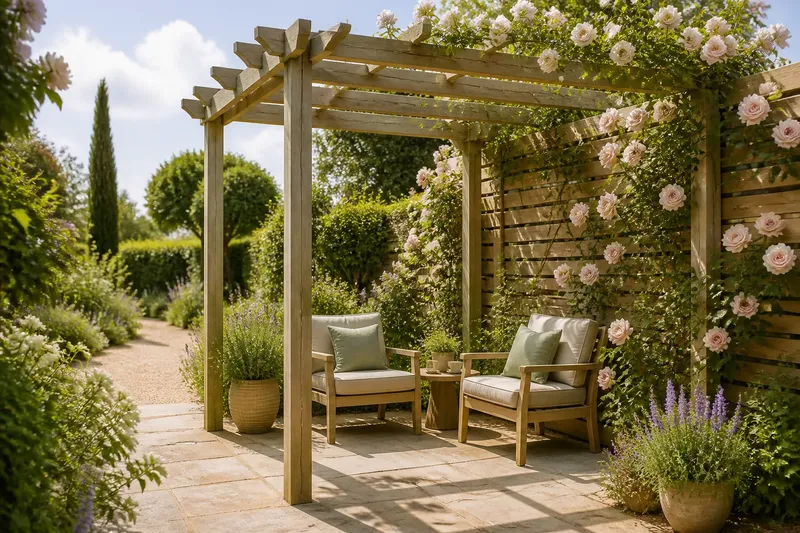
You step onto the patio and notice that the sunny chairs feel disconnected from the garden path. A garden pergola can link those spaces, support climbing plants, or mark a place to sit—but the right design depends on which job matters most.
Rather than treating a pergola as a fixed historical type, consider it an open frame whose purpose comes from its placement, proportions, and any planting it carries. A frame over a walkway works differently from one above a table, even if both use posts and crosspieces.
Start with the garden’s job
A pergola is typically an open structure of upright supports and overhead beams or slats. Unlike a solid roof, its open top lets in air and changing patterns of light. Its clearest use may be supporting vines, defining a route, or giving a seating area a visual boundary.
Write down what you want the structure to do before choosing a material or style. If you want a green passage, the frame needs to suit climbing growth. If you want to make a patio feel like a destination, its position and scale matter more than whether it carries a vine.
Think of the frame as a bookshelf: it can hold something, but its size and placement also shape the room around it. A pergola can support plants while organizing the view and movement through a garden.
Match shape to use
- Path: Check whether the route has enough clear space for posts and overhead growth. If it does, use a linear frame to guide movement; if it does not, keep the route open and place the pergola at its end as a marker.
- Seating: Check whether the intended chairs or table fit beneath the proposed footprint. If they do, position the frame to gather the seating; if they do not, choose a smaller frame or leave the furniture area uncovered.
- Small garden: Check whether a bulky frame would block views across the yard. If sightlines remain open, a light, widely spaced design may define a spot; if they would be interrupted, consider a lower visual profile or a planting feature instead.
- Wall attachment: Check the wall’s construction and the manufacturer’s attachment instructions. If the wall is suitable and the installation requirements are clear, consider a wall-mounted design; if either is uncertain, choose a freestanding option or consult a qualified professional.
- Existing planting: Check whether nearby trees and beds already provide visual weight or overhead cover. If they do, choose a simple frame that complements them; if the area feels bare, a pergola with planned climbers may add structure and greenery.
- Maintenance access: Check whether you can reach the upper beams safely for pruning and care. If access is practical, a plant-covered frame may suit your routine; if it is not, choose a bare frame or ask a qualified professional about safe access and upkeep.
Say you have a sunny paved corner, two chairs, and a climbing rose trained along a fence. You decide the main job is to define the seating rather than cover the entire patio. You place a modest open frame over the chairs and plan to guide the rose along one side; the expected result is a distinct sitting area with foliage at its edge, not a fully enclosed or rainproof room.
Choose plants or open beams
Climbers can soften a pergola’s lines and create a changing canopy as they grow. Their coverage depends on the plant, its growing conditions, and the care it receives, so a new frame will not immediately provide the appearance of an established passage. Before selecting a climber, check its mature size, pruning needs, and suitability for the site.
A bare-beam pergola puts the structure itself on display. It can outline a dining or lounging area without waiting for foliage, but its open top generally provides filtered, shifting shade rather than the continuous cover of a solid roof. Beam spacing and the sun’s direction affect the light beneath it.
You can combine the two approaches. Planting along one side or over part of the frame can soften the structure while leaving some beams visible. This suits a garden where dense growth would feel too heavy or where existing plants already draw the eye.
Compare materials and scale
Wood can blend naturally with garden planting and comes in varied forms, but its care depends on the wood and finish. Metal can create a slimmer, more defined outline. Compare the specific product instructions and the look of nearby fences, buildings, and garden structures rather than assuming one material is always the better choice.
Check the pergola from both the seating area and the approaches to the garden. If tall posts would dominate a low boundary, consider a design with a lighter visual presence; if a low frame would make the seating feel cramped, reconsider its proportions or location. Repeated posts can lead the eye along a path, while a compact arrangement can gather attention around a table.
Before buying or attaching a structure, read the manufacturer’s instructions and check applicable local requirements. Site conditions and attachment details can affect what is suitable; consult a qualified professional when the installation or structural questions exceed your experience.
Questions about garden pergolas?
Does a garden pergola need climbing plants?
No. An unplanted frame can define a seating area or create a visual destination. Choose climbers when their growth, appearance, and ongoing care suit the garden.
Does a pergola provide full shade?
An open pergola usually provides broken shade rather than the continuous cover of a roof. Plants, beam spacing, and the sun’s direction change the effect, so consider whether filtered light suits the intended use.
Should a path and seating pergola have the same shape?
Not necessarily. A path frame generally leads the eye along a route, while a seating frame gathers attention around a place to pause. Let the intended use determine the placement and form.
Can a wall-mounted pergola work on any wall?
No. The wall must be appropriate for the attachment, and the installation must follow the product instructions and relevant local requirements. If you are unsure about the wall or fixing method, consult a qualified professional or choose a suitable freestanding design.
Let purpose guide choice
For a garden pergola, begin by naming its main job: support plants, distinguish a path, define seating, or combine those roles. Then check the layout, light, planting needs, maintenance access, and attachment conditions that follow from that choice.
A frame that makes sense in the garden before its first vine grows is easier to plan around. Once its purpose is clear, planting can strengthen the design instead of being asked to make an awkwardly placed structure feel at home.